Latest Entries »

After devoting  more than three years on research, I realise that my book (Reflections on British Cinema and Identity) is by most objective standards,  an academic title even though this was never my original intention.

The fact that I didn’t set out to write a book for a niche audience of film students or academic scholars is beside the point.  Realistically speaking,  who else would such a book appeal to? Although I would dearly love to lure regular readers who are, like me, are simply huge fans of cinema, this seems to be a pipedream.

The pricing policy of the publishers makes it plain that they do not envisage it attracting such a broad-based readership. As I write, the price on Amazon.UK is a daunting £94.99. You can get it for a little less (£70.99) by buying direct from the publisher  but the obvious assumption is that  the main purchasers are going to be libraries and other places of research.

In search of some consolation, I muse that the price of wider accessibility and affordability is that the finished product may not be taken all that seriously. I suppose the questions I have to ask myself are: What value do you put on extra prestige? Is the price of higher credibility really worth sacrificing?

But I would like people to read the book and can offer these suggestions of how to pay less or even get to read it without paying:

1) Use a Discount Code:  At the time of writing the publishers will make knock 25% off the full price if you use the code PROMO25 at the checkout.

2) Offer to write a review: Potential reviewers can get a free digital copy of the book. Reply to this post if you are interested.

3) Wait for the paperback: By the May 2027 the price of the book will be 50% cheaper.

4) Ask your public or university library to order a copy.

That’s entertainment!

We are inundated by entertainment. Ingulfed, immersed, overwhelmed.

Even when we think we’ve had enough we demand and expect more. The line between truth and reality is blurred. This means that we are confused when real life intrudes: a terorist act, an act of God, a man-made disaster, an argument with a friend, a personal achievement. When any of these happens, a common comment is to say ‘It was just like a movie’.

What used to be the basis for speculative fiction are now daily occurences. There is no need for Science Fiction anymore. A TV presenter becomes President of the USA. A clean-cut dictator threatens to launch a nuclear attack. TV channels boast of being first at the scene of the latest horrific event.

A routine editorial remit is ‘If it bleeds, it leads’. Now that entertainment is so precisely tailored to personal tastes and individual fetishes, consumption becomes an end it itself. So preferable is this to ‘real life’ that it becomes no just an escape but an alternative reality. Welcome to the modern world.

Uncanny Landscapes in 21st-Century British Cinema.  The Pestilence in the Ditch by Lawrence Jackson (Edinburgh University Press, 2025)

The distinctive phrase chosen as the book’s subtitle comes from the author’s interview with Lila Rawlings, a film producer whose credits include Clio Barnard’s ‘The Selfish Giant’ (2013) and ‘Dark River’(2017). Lawrence Jackson uses the image to conjure up visions of “pestilent landscapes, through which lost figures wander.” In this provocative study, the British countryside on screen is envisaged as an impure anti-landscape rather than the place of benign beauty.

The films examined are shown to occupy a malign “disorientating interzone” inhabited by marginalised characters. From this it is argued that “What unites  filmmakers and cultural historians of the new century is this shared sense that our present is a barren space where nothing grows.”  This is a bleak but, in my view, accurate summary of the current state of British cinema.  

View full article »

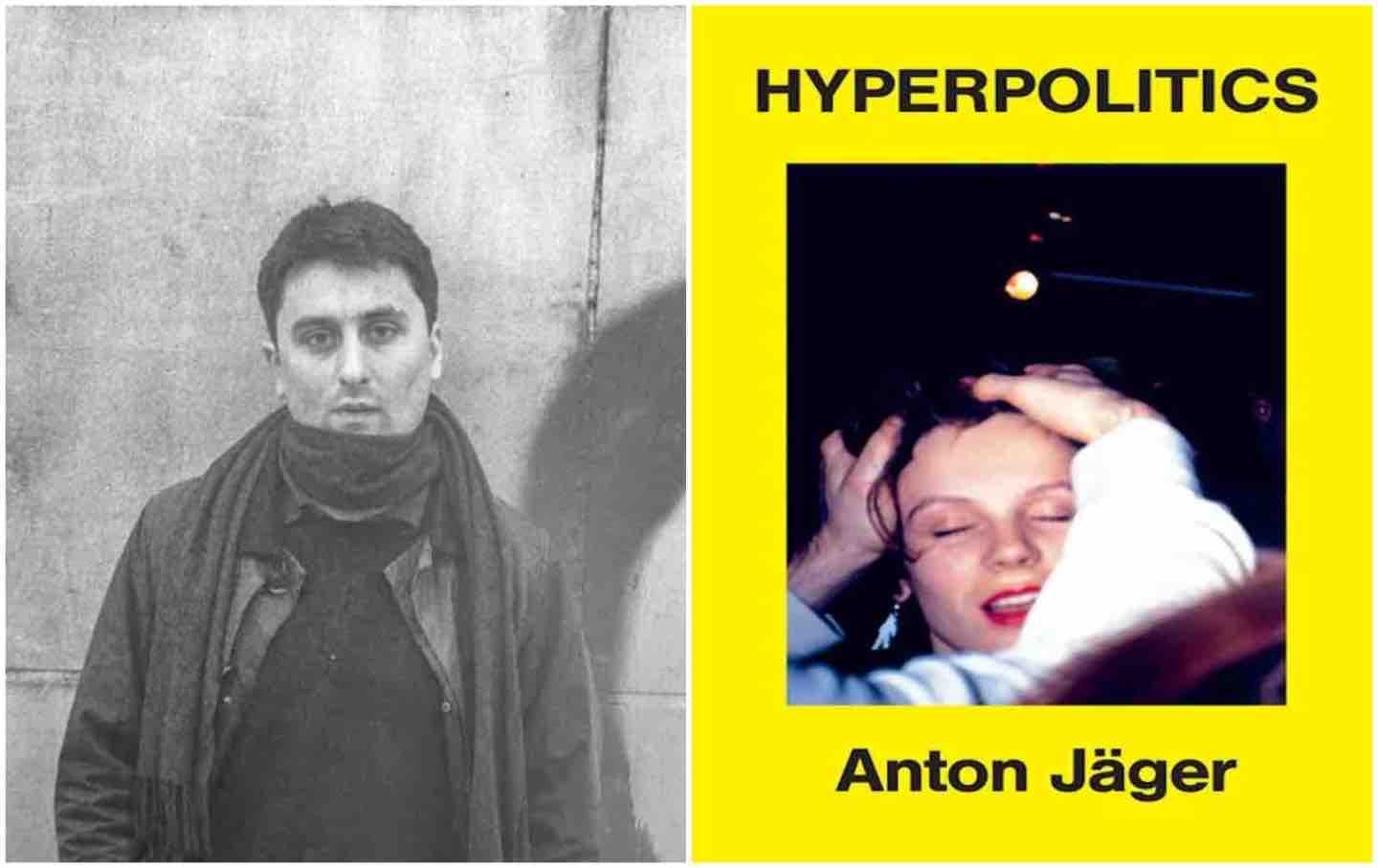
HYPERPOLITICS by Anton Jäger (Verso Books, 2026) HOW TO STAY SANE IN AN AGE OF DIVISION by Elif Shafak (Wellcome Collection, 2020)

I am constantly searching for books that make sense of our messed up world.

I don’t imagine for one minute that I am alone in this regard.

Above all, I am looking for some glimmers of optimism when all the evidence seems to indicate that the human race is doomed to repeat errors of the past and make still more calamitous mistakes in the future.

These two short books, 128 pages and 96 pages long respectively, are by writers who well aware of the scale of the task and under no illusions how urgent the predicament is.

The demise of any sense of collective values and rise of narcissistic individualism is vividly documented by Anton Jäger. He writes how “Today’s societies are composed of increasingly atomized and isolated individuals” and links this with the pace of living by observing that “atomization and acceleration go hand in hand.”

View full article »

I am beyond thrilled to report that my first book on British cinema and identity (both personal and national) has just been published.

After four years of work I feel satisfaction and relief (mixed with some trepidation) that it’s finally in the public domain. 

You can see it, preview it and perhaps even buy it at the Cambridge Scholars website via this link . The price is a bit high ( it’s hardback! … it’s academic! 😉) but if you care to DM me, I would be happy to offer the option of a competitive discount . 

A sample chapter is downloadable to get the flavour of the product so it would be redundant to repeat what is online elsewhere.As an alternative I have posted a short summary of my aims in each of the nine chapters whcih you can read on Substack.

Any comments and feedback welcome.